Maksim Sedej - Landscape Drawings of the Castle Hill
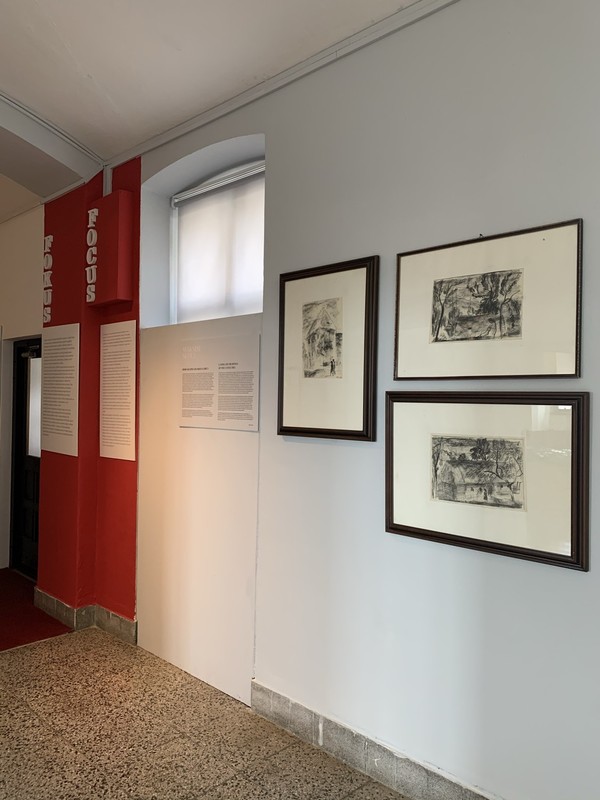
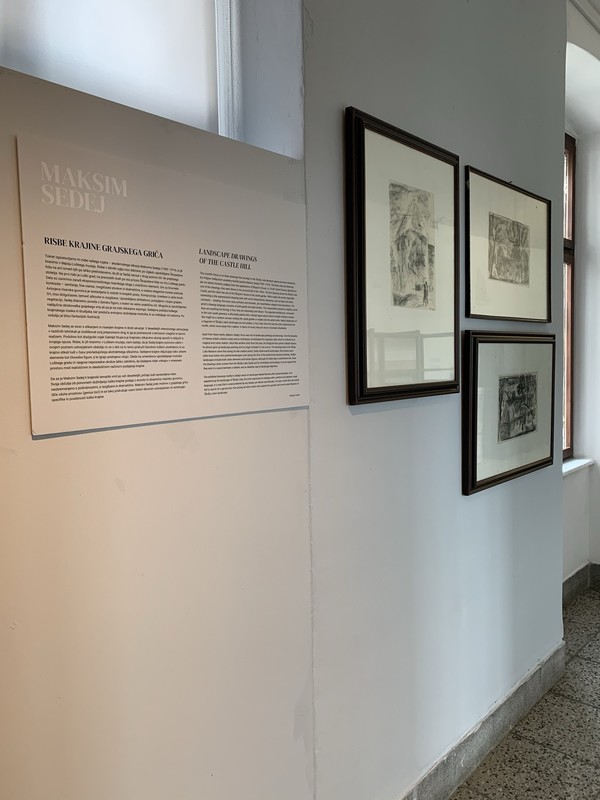
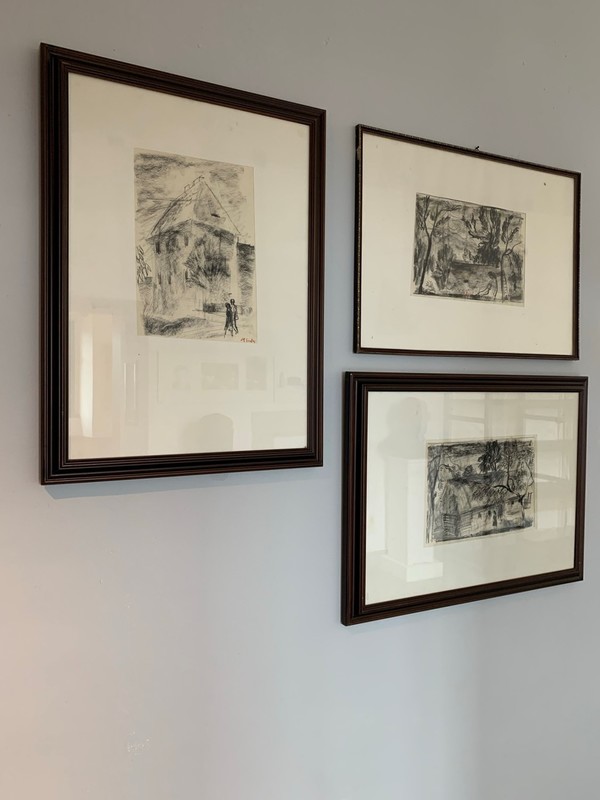
This month’s focus is on three drawings that are kept in the Škofja Loka Museum depot and were created by the Poljane Valley-born academy-trained painter Maksim Sedej (1909–1974). The three charcoal drawings are not dated, however, judging from the appearance of Škopar's House, i.e. Chuff Cutter's House, depicted on one of the drawings, they were drawn in the second half of the 1960s. The first drawing shows the Škofja Loka Castle, and the other two are of the Škopar's House in the castle garden. What makes the works especially interesting is the expressionist drawing style with some characteristic elements, such as black and white contrasts – shading, fine hues, hazy surfaces and dramatic, yet nevertheless elegant tonal transitions. The artist's drawing language consists of both gentle and bold strokes. The compositions based on slightly curved lines are anything but boring, in fact, they are interesting and vibrant. The depicted architecture, immersed in the lush castle greenery, is discretely paired with a female figure about whom virtually nothing is known. She might be a random woman visiting the castle garden or maybe she the artist's wife. Sedej's depictions of a fragment of Škofja Loka's landscape are not studies, in fact, they show the way the artist experiences the motifs, which move away from realism. In terms of mood, they are close to fantastic illustration.
Apart from these works, Maksim Sedej's focus was not on landscape paintings and drawings. Over the decades of intense artistic creation using various techniques, he developed his signature style, which he referred to as magical and colour realism. Much like another artist from this area, the Dražgoše-born painter Gabrijel Stupica, he almost gave up landscape painting and no longer included it in his oeuvre. The drawings kept at the Škofja Loka Museum show that during his late creative period, Sedej rediscovered landscapes, thus joining many other local artists who painted landscapes even during the time of the predominant abstract painting. Sedej’s landscapes include both urban elements and human figures, although the latter play a subordinate role. Since the drawings show scenes from the Škofja Loka Castle and its immediate surroundings, it can be argued that they exist in a space between a realistic and an idealistic way of landscape depiction.
The exhibited drawings testify to Sedej’s return to landscape-related themes after several decades. In re-experiencing the landscape of Škofja Loka, the artist expresses his feelings with a uniform and dynamic visual language, in a way that is unencumbered by any details, yet vibrant and dramatic. He uses motifs from the castle hill to search for a genius loci, thus joining all other artists who explore the specific and one-of-a-kind features of Škofja Loka's landscape.