
The Foundation Stone of the Baroque Church of St Martin in Poljane nad Škofjo Loko
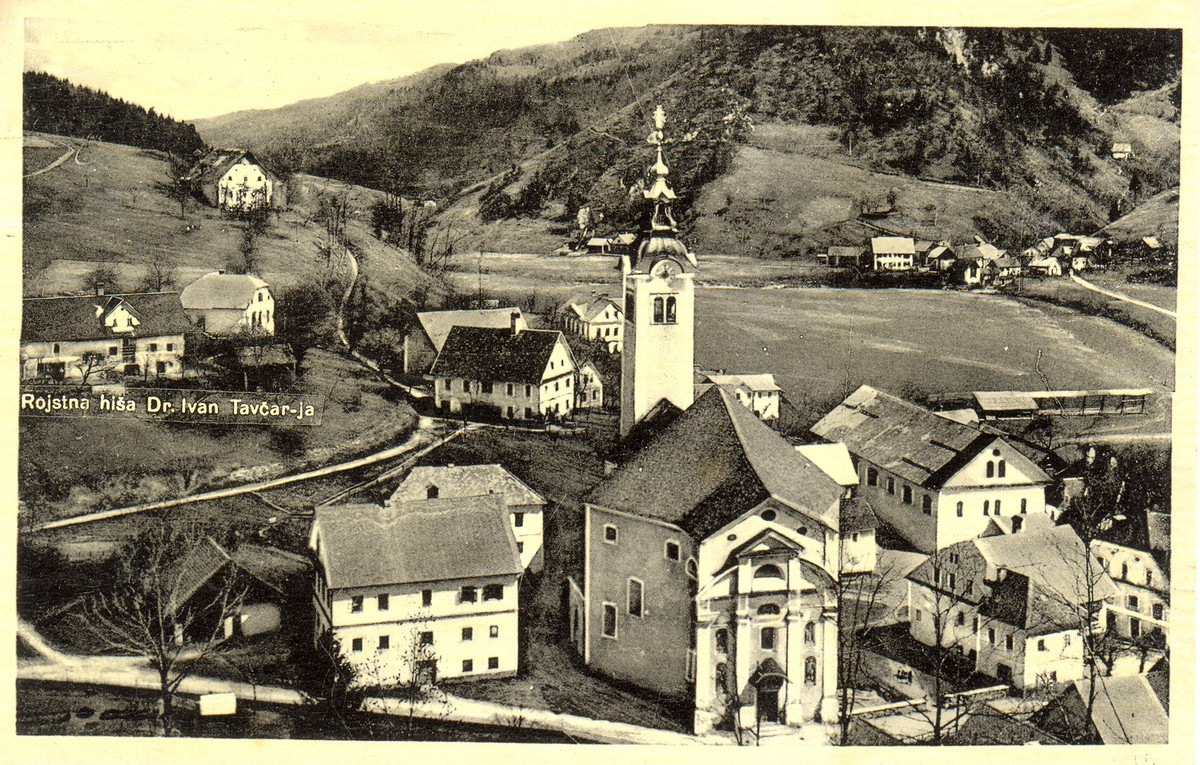
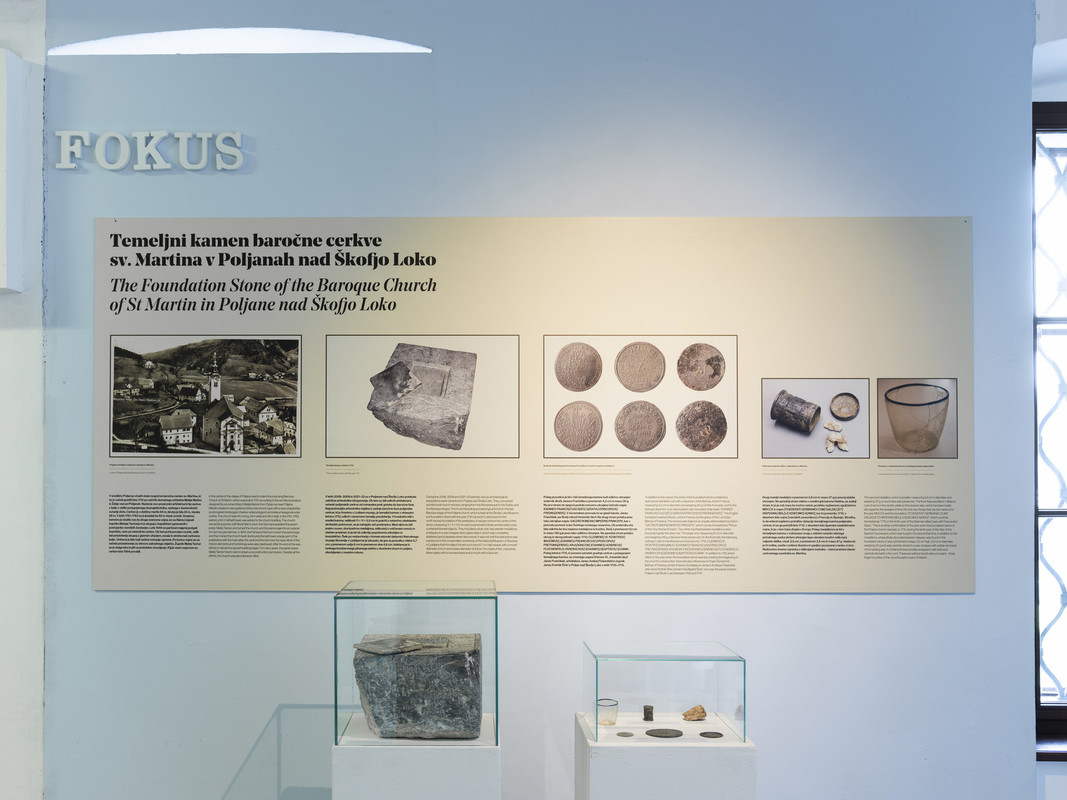
In the centre of the village of Poljane used to stand the imposing Baroque Church of St Martin, which was built in 1710 according to the architectural plans designed by a local architect, Matija Maček from Žabja vas near Poljane. Maček created a new spatial architectural church type with a nave shaped like an elongated dodecagon (twelve-sided polygon) set inside a hexagonal outer outline. The church was 44 m long, 24 m wide and 28 m high. In the 1761–1763 period, a 50 m tall bell tower was added to the church building. The church served its purpose until World War II, when the Germans expelled the parish priest, Matej Tavčar, and turned the church and the parsonage into an outpost for German gendarmes. In 1944, the Partisans first burnt down the parsonage and then mined the church itself, destroying the bell tower, a large part of the presbytery with the main altar, the vault and the roof over the nave. Most of the interior elements and furnishings were also destroyed. After the end of the war, efforts to rebuild the sacred building began. For many years, the parish priest Matej Tavčar tried in vain to obtain a reconstruction permission. Despite all the efforts, the church was demolished in 1954.
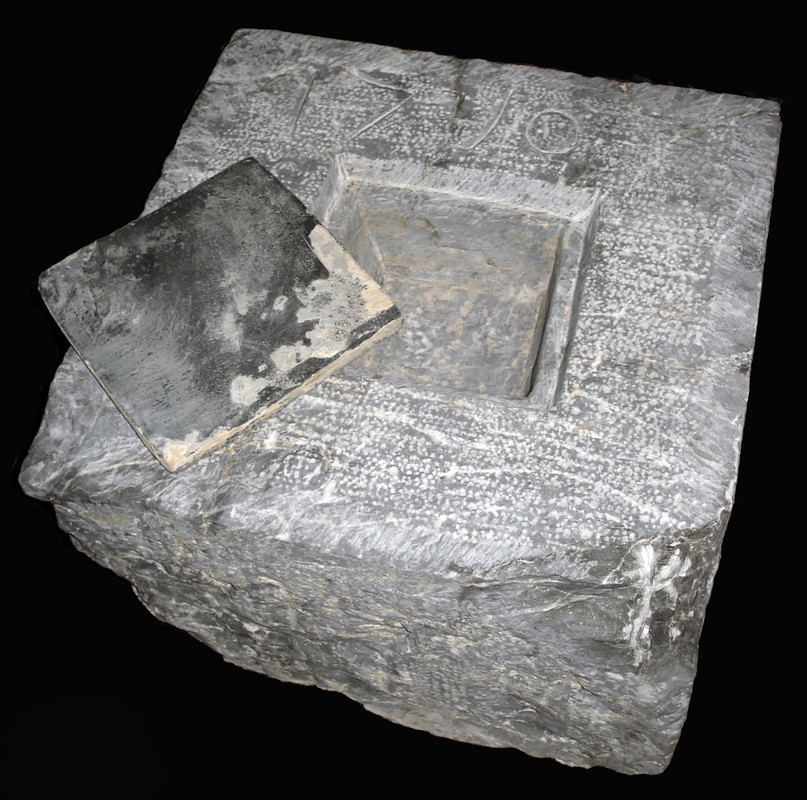
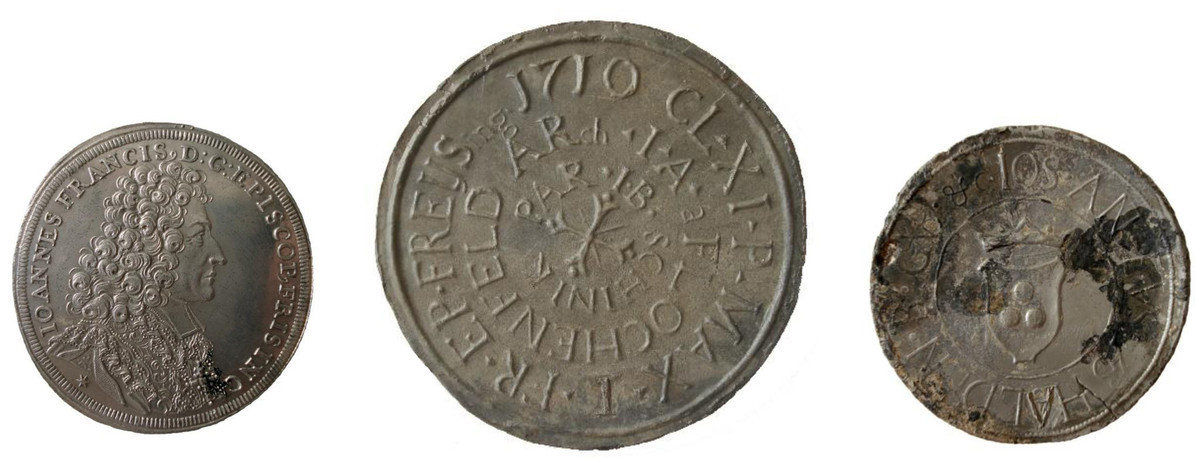
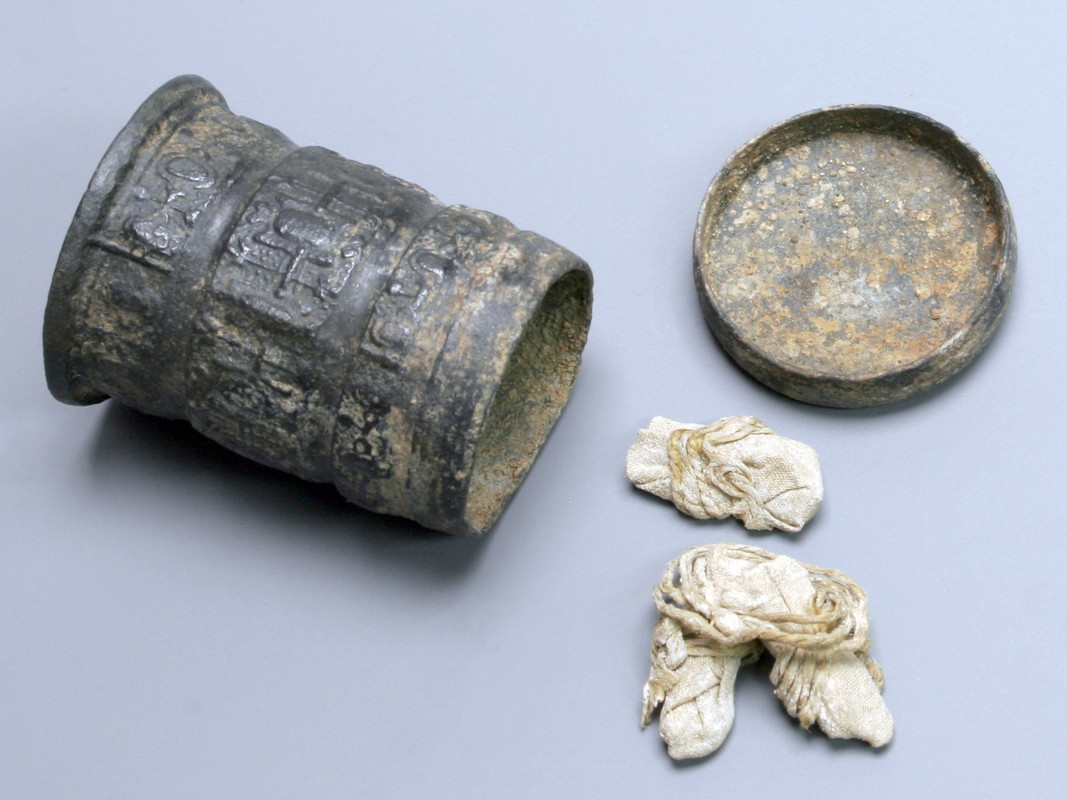
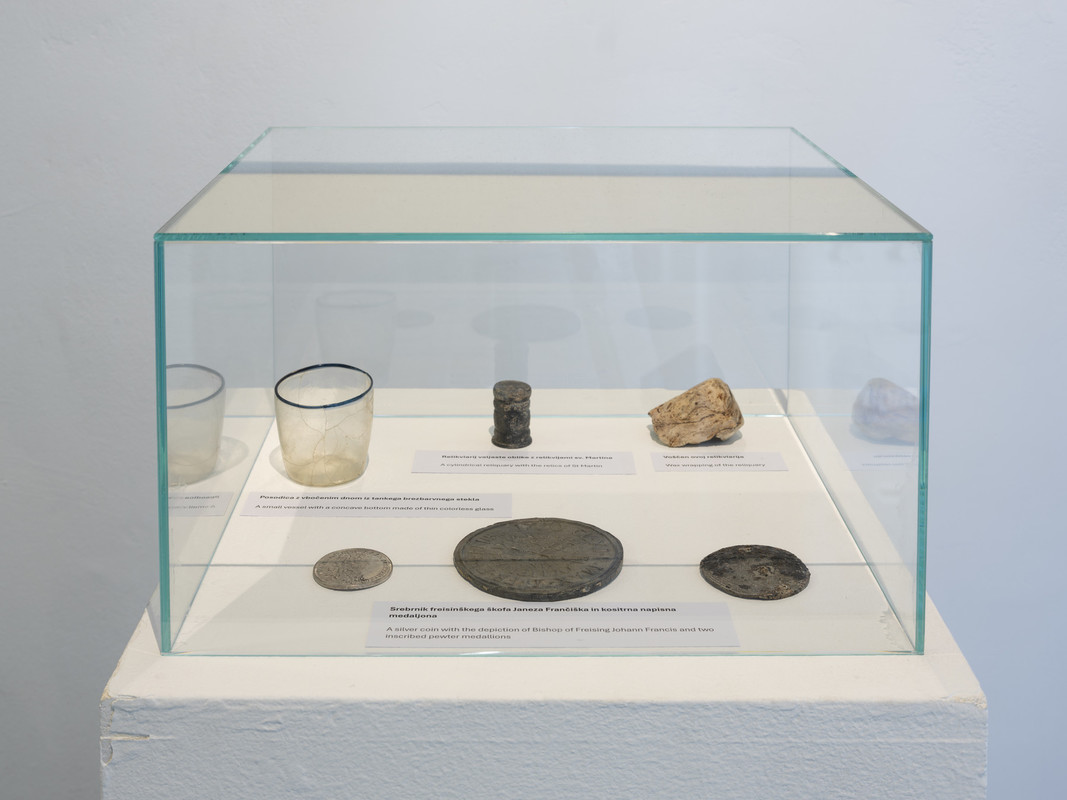
During the 2008–2009 and 2021–22 periods, rescue archaeological excavations were carried out in Poljane nad Škofjo Loko. They uncovered architectural church remains, ranging from the Romanesque to the Gothic and the Baroque stages. The most interesting archaeological find from the last Baroque stage of the Poljane church, which is kept at the Škofja Loka Museum, is a foundation stone with the year 1710 carved in it, discovered in the north-facing foundation of the presbytery. A square niche in the centre of the stone, measuring 11 × 11 × 5.5 cm and covered with a finely worked slate cover, contained several objects. They included a silver coin, two pewter medallions, a reliquary in a wax wrapper and a glass object, which was completely shattered and shapeless when discovered. It was not until the restoration was carried out in the conservation workshop of the National Museum of Slovenia in Ljubljana that this object turned out to be a 5.7 cm high vessel, with a mouth diameter of 6 cm and a base diameter of 4.9 cm. It is made of thin, colourless blown glass with a concave base and a mouth with a blue rim. In addition to the vessel, the niche of the foundation stone contained a well-preserved silver coin with a depiction of the Bishop Johann Francis, measuring 4.2 cm in diameter and weighing 30 g. On the front side, next to the bishop’s depiction, is an abbreviated Latin inscription that reads “IOANNES FRANCIS[CUS] D[EO] G[RATIA] EPISCOP[US] FRISING[ENSIS].” The English translation read as follows: Johann Francis, by the grace of the Lord God, Bishop of Freising. The reverse side features an equally abbreviated inscription “SAC[RI] ROM[ANI] IMP[ERII] PRINCEPS”, which can be translated as “Prince of the Holy Roman Empire”. Two other inscribed pewter medallions were found alongside the silver one. The larger one, measuring 9.1 cm in diameter and weighing 192 g, is likewise finely preserved. On the front side, the following writing in Latin is inscribed around and around: “1710; CL[EMENS] XI. P[ONTIFEX] MAX[IMUS]; I[OANNES] FR[ANCISCUS] EP[ISCOPUS] FREYSING[ENSIS]; ARch[IDIACON] I[OANNES] A[NDREUS] FLOCHENFELD; PAR[ROCHUS] I[OANNES] B[APTISTA] SCHINIK”. In addition to 1710, which refers to the year when the foundation stone was laid, marking the beginning of the church’s construction, there are also references to Pope Clement XI, Bishop of Freising Johann Francis, Archdeacon Johann Andreas Flokenfeld and Janez Krstnik Šink (Johann the Baptist Šink), who was the parish priest in Poljane nad Škofjo Loko between 1705 and 1715. The second medallion, which is smaller, measuring 5.8 cm in diameter and weighing 37 g, is much less well-preserved. The front features Baron Halden’s coat of arms in the centre, while on the reverse side, which has been badly damaged by the ravages of time, the only two things that can be made out is the year MDCCX and the inscription “[FOEDERATI GERMANICI CUM] GAL[IA] [ET] HISP[ANIA] BEL[LI] X[DECIMO] A[NNO]”, which could be translated as “1710, in the tenth year of the [German allies’] war with France and Spain.” This is another confirmation of the year when the foundation stone of the Poljane church was laid, i.e. 1710, during the tenth year of the War of the Spanish Succession, which was fought in Europe at that time. In addition to the medallions, a beautifully decorated pewter reliquary was found in the foundation stone. It was cylindrical in shape, 3.5 cm high, 2.5 cm in diameter, weighing 47 g and was carefully stored in a wax wrapper with visible remnants of red sealing wax. It contained three bundles wrapped in silk cloth and carefully tied with a thin cord. These are without doubt relics of a saint – three finger knuckles of the church’s patron saint, St Martin.