
The Great Book of the Škofja Loka Museum

What Is the Aim of Museum Records?
Collecting and accessioning museum objects is crucial for the work of any museum. Well-organised documentation provides a solid basis for all other kinds of specialist museum work. The details noted down about individual objects provide a better insight into the time and place in which each object was made or used, and also aid in further research into various topics and staging of exhibitions.
Collections of Museum Objects
The Škofja Loka Museum is one of the central institutions focused on the preservation of cultural heritage and its core are various objects that bear witness to the local past. Members of the Škofja Loka Museum Society were well aware of this and, at their first general assembly, they undertook to personally collect items for the first museum collections. They spent a lot of time rummaging through attics, gathering whatever they found interesting. Over time, people came to understand the importance of preserving objects, and started bringing various items to the Museum Society members themselves. A total of 915 items were collected for the very first collections.
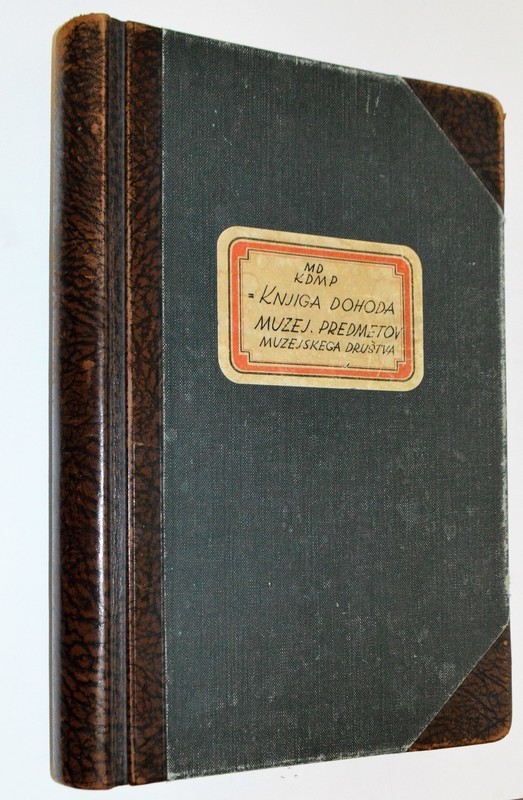
All sorts of different items were collected, ranging from objects belonging to various guilds, paintings, ethnological objects, archaeological artefacts, and various other objects that might be of interest to the public. The Museum Society members took care of the objects themselves, i.e. they cleaned them, recorded them in the accession register, noted down the details, assigned each object an accession number etc. All the objects were listed in the book entitled Museum Society – The Book of Objects Acquired by the Museum (1938–1949) and The Book of Objects Acquired by the Museum (1961–1978).
The first items were entered into the book on 8 August 1938. The book contains more than 2,000 items and archival documents divided into ethnology, cultural history, archaeology, and art history. In the beginning, a large part of the objects listed in the book consisted of archival documents, mostly guild documents (registers of landed property belonging to individual Škofja Loka guilds), which were later handed over to the Ljubljana Historical Archives – Škofja Loka Unit.
The listing for each object acquired by the museum included a sequential number, the time of accession, the object's name and short description, the material and technique, the size, where the objects originated from, document / the owner's name, purchased/donated/handed over for safekeeping, condition, who the object was accessioned by, the photo collection number, the accession number, and notes.
In the past, museums maintained various records and documents about the acquired objects. Nowadays, however, accession registers and index cards have been replaced by computerised documentation and digital documents, which are used in the Škofja Loka Museum as well. Some of the merits of digital accession registers are that the objects in the possession of the museum are more manageable, data are easier to find and compare, and a larger amount of information about the museum objects can be included, i.e. current object location, condition, restoration and conservation procedures carried out on the object, and everything else that is relevant to the provenance and history of the object.