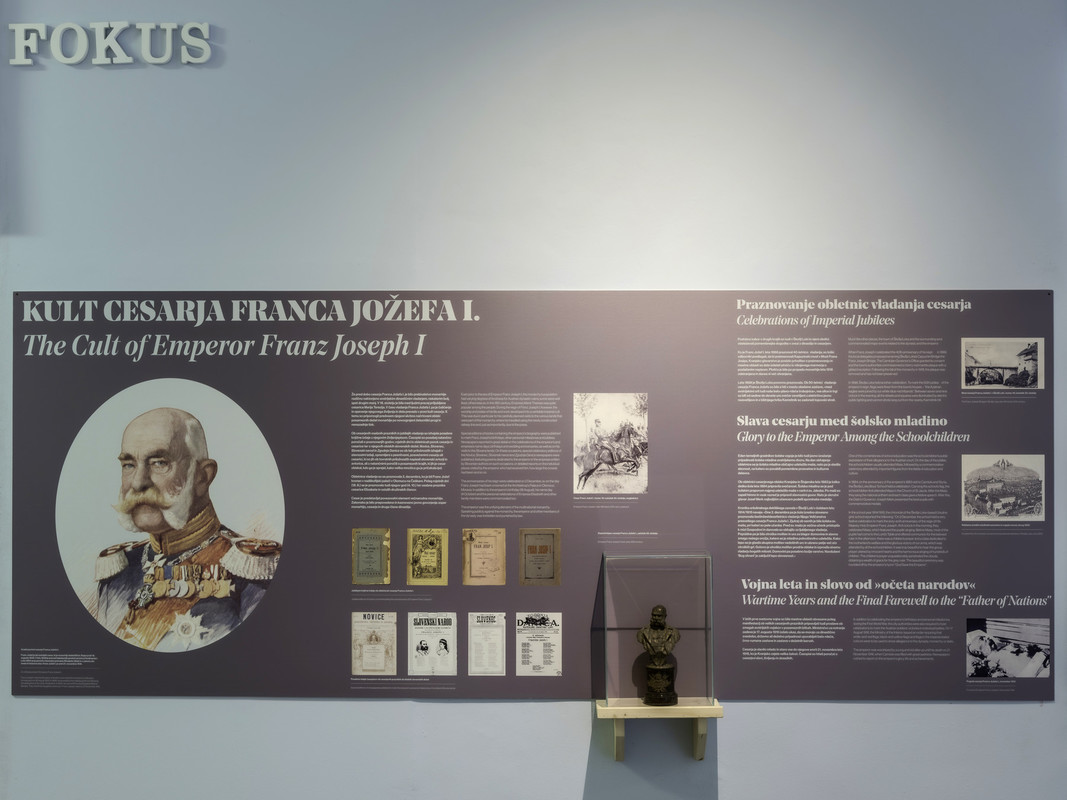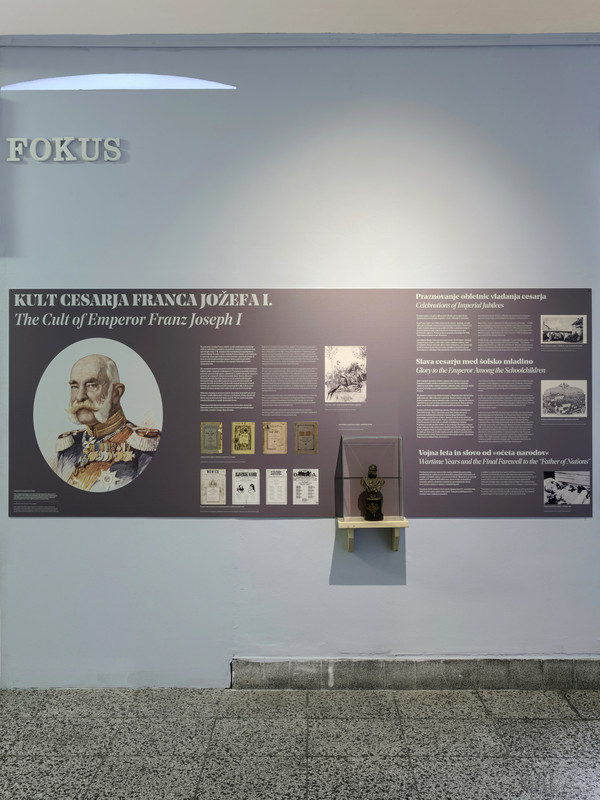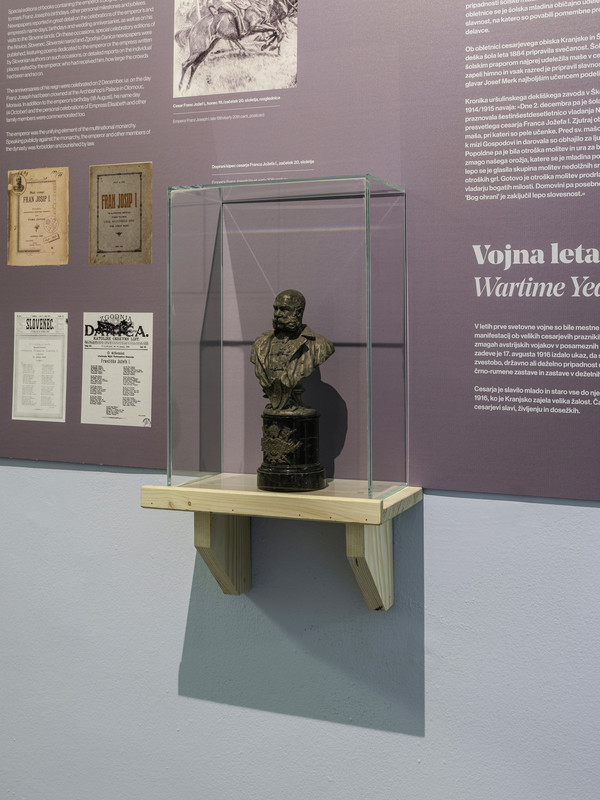
The Cult of Emperor Franz Joseph I
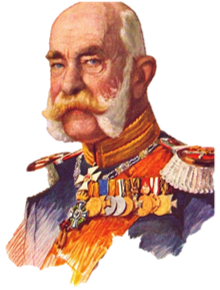
An official portrait of Emperor Franz Joseph I.
Franz Joseph I was the Emperor of Austria, who ruled the monarchy for 68 years.
He was born on 18 August 1830. In 1848, he acceded to the Habsburg throne following the abdication of his uncle, Ferdinand I. In 1854, he married Princess Elisabeth (Sisi) of Bavaria. They had three daughters and a son.
Franz Joseph I died on 21 November 1916.
Introduction
Even prior to the era of Emperor Franz Joseph I, the monarchy’s population had varying degrees of fondness for Austrian dynastic rulers; some were well liked, others less so. In the 18th century, Empress Maria Theresa was quite popular among the people. During the reign of Franz Joseph I, however, the worship and praise of his life and work developed into a veritable imperial cult. This was due in particular to his carefully planned visits to the various lands that were part of the monarchy, where he travelled using the newly constructed railway line and, just as importantly, due to the press.
Special editions of books containing the emperor’s biography were published to mark Franz Joseph’s birthdays, other personal milestones and jubilees. Newspapers reported in great detail on the celebrations of the emperor’s and empress’s name days, birthdays and wedding anniversaries, as well as on his visits to the Slovene lands. On these occasions, special celebratory editions of the Novice, Slovenec, Slovenski narod and Zgodnja Danica newspapers were published, featuring poems dedicated to the emperor or the empress written by Slovenian authors on such occasions, or detailed reports on the individual places visited by the emperor, who had received him, how large the crowds had been and so on.
The anniversaries of his reign were celebrated on 2 December, i.e. on the day Franz Joseph had been crowned at the Archbishop's Palace in Olomouc, Moravia. In addition to the emperor’s birthday (18 August), his name day (4 October) and the personal celebrations of Empress Elisabeth and other family members were commemorated too.
The emperor was the unifying element of the multinational monarchy. Speaking publicly against the monarchy, the emperor and other members of the dynasty was forbidden and punished by law.
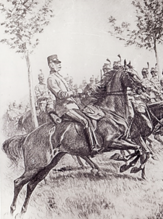
Emperor Franz Joseph I, late 19th/early 20th cent., postcard
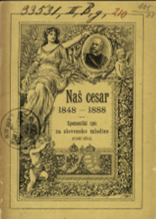
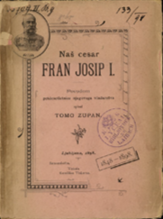
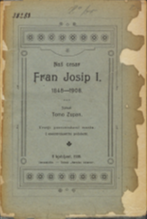
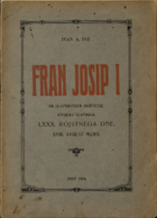
Jubilee editions of books commemorating the anniversaries of Emperor Franz Joseph I.
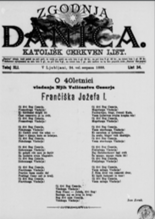
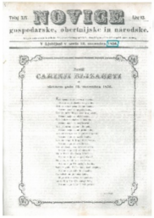
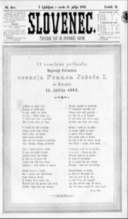
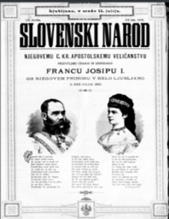
Special editions of newspapers published to mark the emperor’s personal milestones or his visits to Slovene lands
Celebrations of Imperial Jubilees
Much like other places, the town of Škofja Loka and the surrounding area commemorated major events related to the dynasty and the emperor.
When Franz Joseph I celebrated the 40th anniversary of his reign in 1888, the local delegates proposed renaming Škofja Loka’s Capuchin Bridge the Franz Joseph Bridge. The Carniolan Governor’s Office granted its consent and the town’s authorities commissioned a cherry-red marble plaque with a gilded inscription. Following the fall of the monarchy in 1918, the plaque was removed and has not been preserved.
In 1898, Škofja Loka held another celebration. To mark the 50th jubilee of the emperor’s reign, flags were flown from the town’s houses – “the Austrian eagles were joined by our white-blue-red tribands”. Between seven and nine o’clock in the evening, all the streets and squares were illuminated by electric public lighting and cannon shots rang out from the nearby Kamnitnik hill.
Glory to the Emperor Among the Schoolchildren
One of the cornerstones of school education was the schoolchildren’s public expression of their allegiance to the Austrian court. On the day of the jubilee, the schoolchildren usually attended Mass, followed by a commemorative ceremony attended by important figures from the fields of education and culture.
In 1884, on the anniversary of the emperor’s 1883 visit to Carniola and Styria, the Škofja Loka Boys’ School held a celebration. Carrying the school’s flag, the schoolchildren first attended Mass in the Church of St Jacob. After the Mass, they sang the national anthem and each class gave a festive speech. After this, the District Governor Joseph Merk presented the best pupils with commemorative medals
In the school year 1914/1915, the chronicle of the Škofja Loka-based Ursuline girls’ school reported the following: “On 2 December, the school held a very festive celebration to mark the sixty-sixth anniversary of the reign of His Majesty, Holy Emperor Franz Joseph. At 8 o’clock in the morning, they celebrated Mass, which featured the pupils’ singing. Before Mass, most of the pupils had come to the Lord’s Table and offered communion for the beloved ruler. In the afternoon, there was a children’s prayer and a class dedicated to the motherland’s welfare and the glorious victory of our arms, which was attended by all the schoolchildren. It was truly beautiful to hear the group prayer uttered by innocent hearts and the harmonious singing of hundreds of children. The children’s prayer unquestionably penetrated the clouds, obtaining a wealth of grace for the grey ruler. The beautiful ceremony was rounded off by the emperor’s hymn “Good Save the Emperor”.
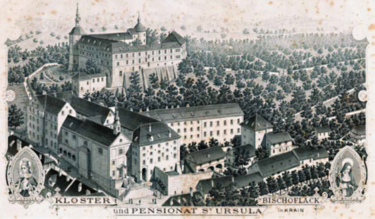
An advert for the Ursuline convent and educational institution in Škofja Loka, circa 1900
Wartime Years and the Final Farewell to the “Father of Nations"
In addition to celebrating the emperor’s birthdays and personal milestones, during the First World War, the city authorities were also required to hold celebrations to mark the Austrian soldiers’ victories in individual battles. On 17 August 1916, the Ministry of the Interior issued an order requiring that white-and-red flags, black-and-yellow flags and flags in the imperial states’ colours were to be used to show allegiance to the dynasty, monarchy or state.
The emperor was worshiped by young and old alike up until his death on 21 November 1916, when Carniola was filled with great sadness. Newspapers rushed to report on the emperor’s glory, life and achievements.
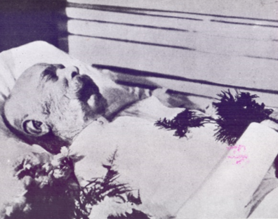
Funeral of Emperor Franz Joseph I, November 1916