
Tomaž Furlan’s Book: An Interactive Insight into the Wear Series
Since 18 June 2025, the Loft Gallery, the newest exhibition space at Škofja Loka Castle, has been hosting the exhibition Tomaž Furlan’s Manual, which showcases a selection of works by the established Slovenian artist Tomaž Furlan, created between 2005 and 2025. The conceptually cohesive exhibition brings together Furlan’s three main “sculptural series”, Wear (2005–), Morning (2019–) and Walk (2021–), alongside works based on his earlier sketches, which are presented to the public for the first time. A particular focus of the exhibition is the artist’s intermedia work Book (2010), which has been part of the Škofja Loka Museum’s collection since 2019. As part of the Moving Focus (Premični focus) exhibition format, a compilation of video performances from Furlan’s Wear cycle will be shown in the Museum’s Living Room.
Artist Book
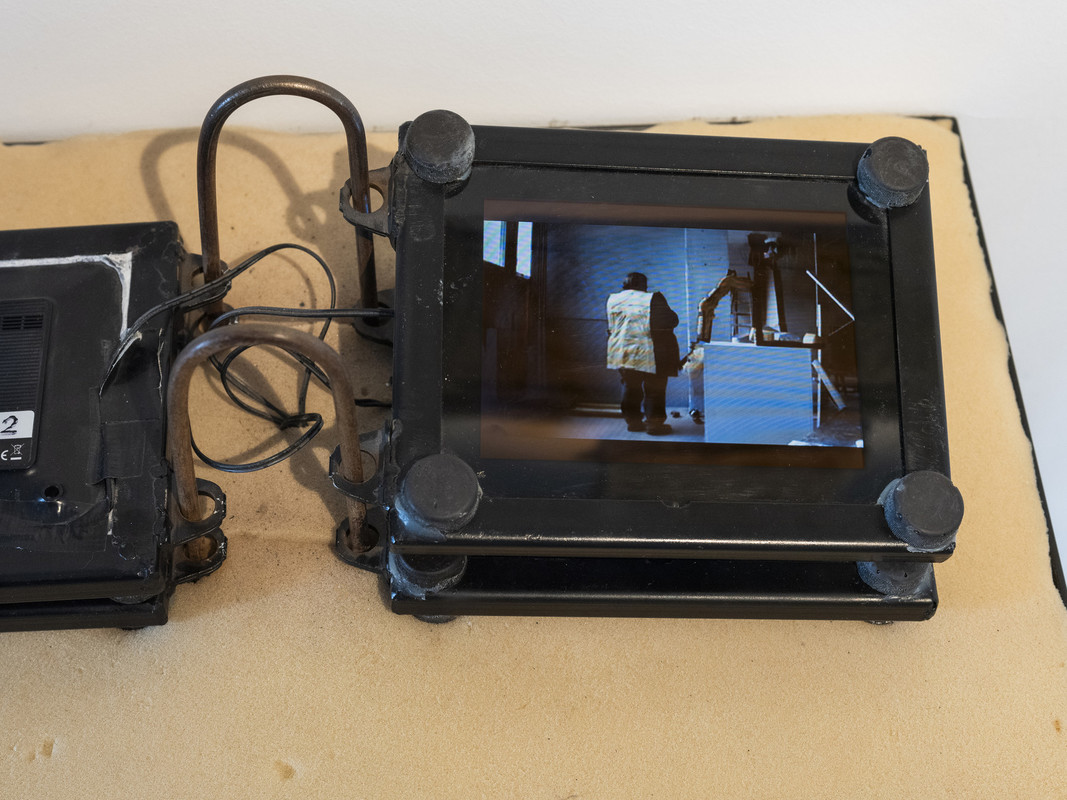
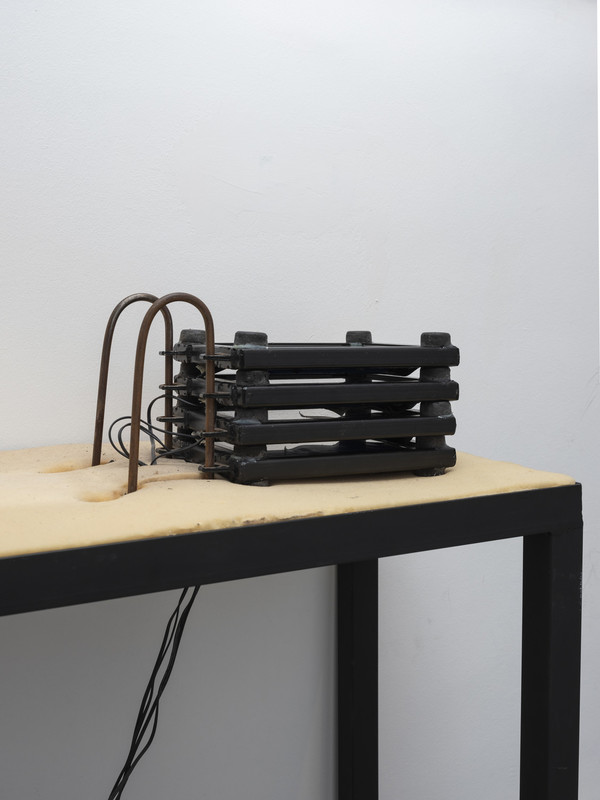
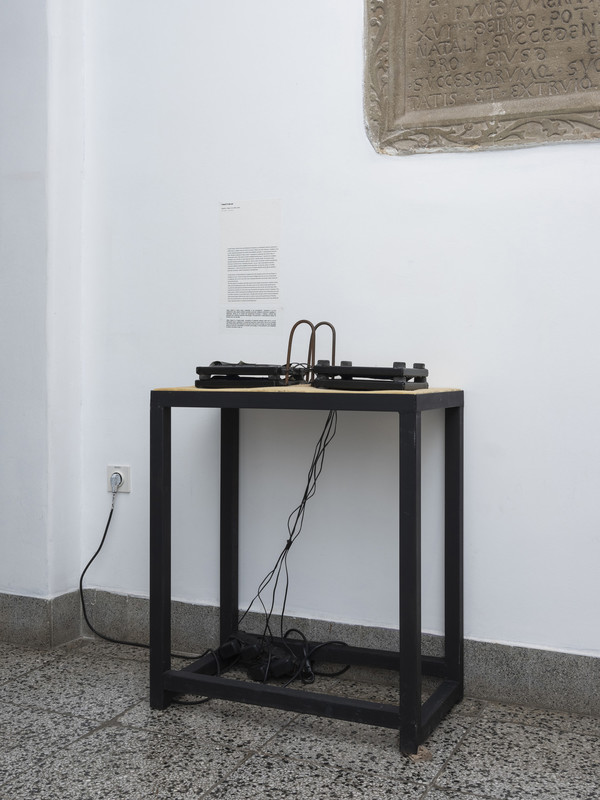
On the ground floor of the Škofja Loka Museum, Furlan’s work Book (2010) is on display as part of the art history collection. Made of scrap iron, foam and digital screens, this intermedia object is part of the artist’s Wear series. Museum visitors can turn the metal pages fitted with digital screens and browse through a series of short videos. Each page plays one of the artist's first four video performances (Wear I–IV). The work integrates sculpture, performance and video, allowing visitors to interact directly with the artwork in a way that is typically discouraged or even forbidden in a museum environment.
When the Body Becomes a Machine
Tomaž Furlan started working on his Wear series in 2005 during his sculpture studies at the Academy of Fine Arts and Design in Ljubljana, and has continued to develop it in a somewhat modified form ever since. The first videos were the result of do-it-yourself experimentation with the video medium. At that time, the artist acquired his first camera and computer, which allowed him to film and edit his footage on his own. As he was both the camera operator and the performer, the camera remained static. For each video, he also designed props: “garments” made from discarded materials.
The series title, Wear, draws attention to the so-called “sculptural exoskeletons” –devices that are meant to make everyday tasks easier for those who wear them, yet which often end up hindering them instead. This reversal of practicality links many of the “sculptural” objects in the series, including the artist’s interpretation of the book in the identically titled work, Book.
Wear I–IV (2005)
In the video Wear I, Furlan uses a hand-shaped prop made of scrap iron and foam. Rather than leaving the sculptural work separate from the body, the artist attaches it to himself like a kind of prosthesis, using it to perform mundane everyday tasks in front of the camera, such as crushing cans or cleaning. In post-production, Furlan added a soundscape from Akira Kurosawa’s film Seven Samurai and, in places, sped up the natural pace of the footage, further emphasising the mechanical quality and absurdity of the protagonist’s movements.
The second piece in the series, Wear II, continues the experimentation with video and performance, this time shifting the focus to the production process itself, i.e. the making of the costume, while the “sculptural object” recedes into the background. The artist has used music from Tarantino’s film Kill Bill as an accompanying soundtrack, with its slowed-down tempo evoking East Asian ideals of patience, perseverance and perfection in craftsmanship. These are values that Western society often admires but tends to avoid, as they do not offer instant gratification.
Wear III, the last video recorded within the academy’s premises, revolves around the repetitive execution of banal actions. The artist first puts on a foam piece of clothing, proceeds to rhythmically bang his head against the wall, and concludes by carefully putting returning the foam garment in its original place. The accompanying sound consists of the monotonous impacts of his head against the wall. This absurd choreography highlights the futility of repetitive actions performed without a clear goal. As with many works in this series, Wear III explores pointless work, i.e. work that becomes an end in itself, reflecting the many absurdities of contemporary society.
For the fourth video, Furlan once again created a kind of prosthesis, this time in the form of footwear. The new “exoskeleton” places an additional 20 kilograms of weight to each leg. Instead of helping the artist perform various tasks, such as tidying up (as shown in the video), the invention makes movement even more difficult. For this piece, Furlan used not only scrap iron and foam but also, for the first time, the stone-cutting skills he learned as a child in his family workshop in Škofja Loka. Wear IV was produced in his newly acquired studio in Ljubljana. The object was temporarily placed in a public space, in the courtyard next to the studio, where the artist could observe the reactions of passers-by. The triptych Wear V–VI–VII (2005–2008) was later recorded at Metelkova autonomous social and cultural centre; together with the interactive objects, it is featured in the exhibition at the Loft Gallery.
An Evolving Series
The Wear series focuses on the everyday reproduction of absurdities, drawing attention to the experience of the individual caught up in contemporary economic circumstances. Growing interest from audiences and curators led Furlan to later also exhibit the objects from his video performances that he had initially recycled — individual elements of one object often became the foundations of new works or props in subsequent performances.
Although the Wear series is not (yet) complete, Furlan has not created any further video performances since 2014, when he produced Wear XVII, the final video performance within the series to date. As smartphones and recording technologies became increasingly ubiquitous, the artist’s interest in video as an art medium gradually diminished. He continued, however, to create (interactive) objects as well as spatial installations and situations that invite active audience participation. He consciously handed over the role of the performer to the viewers, who thus become active participants in the artistic process. Such participation is central to the object Book (2010) and to many other of Furlan’s works that will be presented in the exhibition at the Loft Gallery. Some other works from the Wear series that deserve special attention are, for instance, the smaller-format objects Wear XX, XXI and XXII (2015). Visitors to the exhibition will set in motion the artist’s movements (dancing or sleeping) in the mechanically designed screens of each object by cranking a handle. These screens operate without electricity, relying instead on the visitors’ physical involvement.
Video Viewing Nook in the Museum Living Room
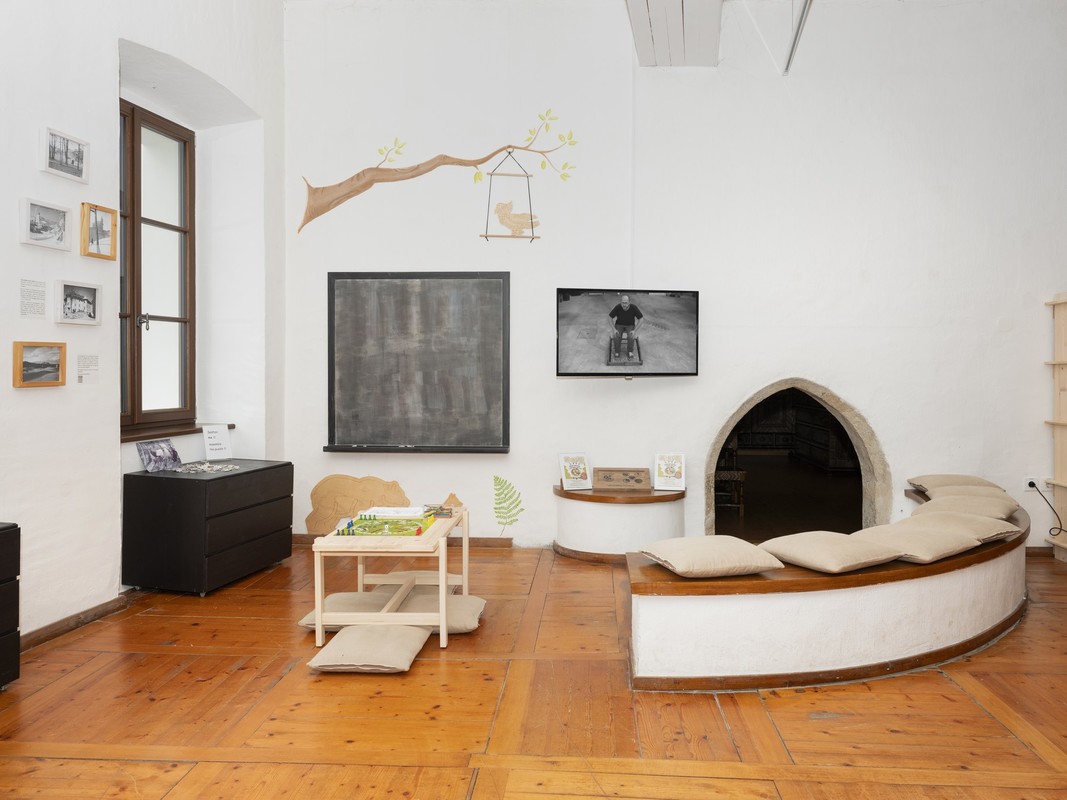
As part of the Moving Focus, an exhibition format dedicated to exploring and expanding the context of selected museum artefacts, the Museum Living Room presents all video works by Tomaž Furlan from the Wear series (I–XVII, 2005–2014). Most of the videos can also be viewed on the artist’s website and in the Digital Video Archive of Video Art, Film and New Media Art (DIVA).